

California’s shared fault car accident system allows you to recover compensation even when you contributed to causing the crash.
Under the state’s pure comparative negligence rule, your damages are reduced by your percentage of fault, but you can still collect money from other drivers regardless of how much blame you share.
When multiple parties cause an accident, insurance companies work aggressively to assign you as much fault as possible to reduce their payouts.
Understanding how fault percentages are determined, what evidence protects you, and how California’s specific laws apply to your situation becomes critical for maximizing your compensation.
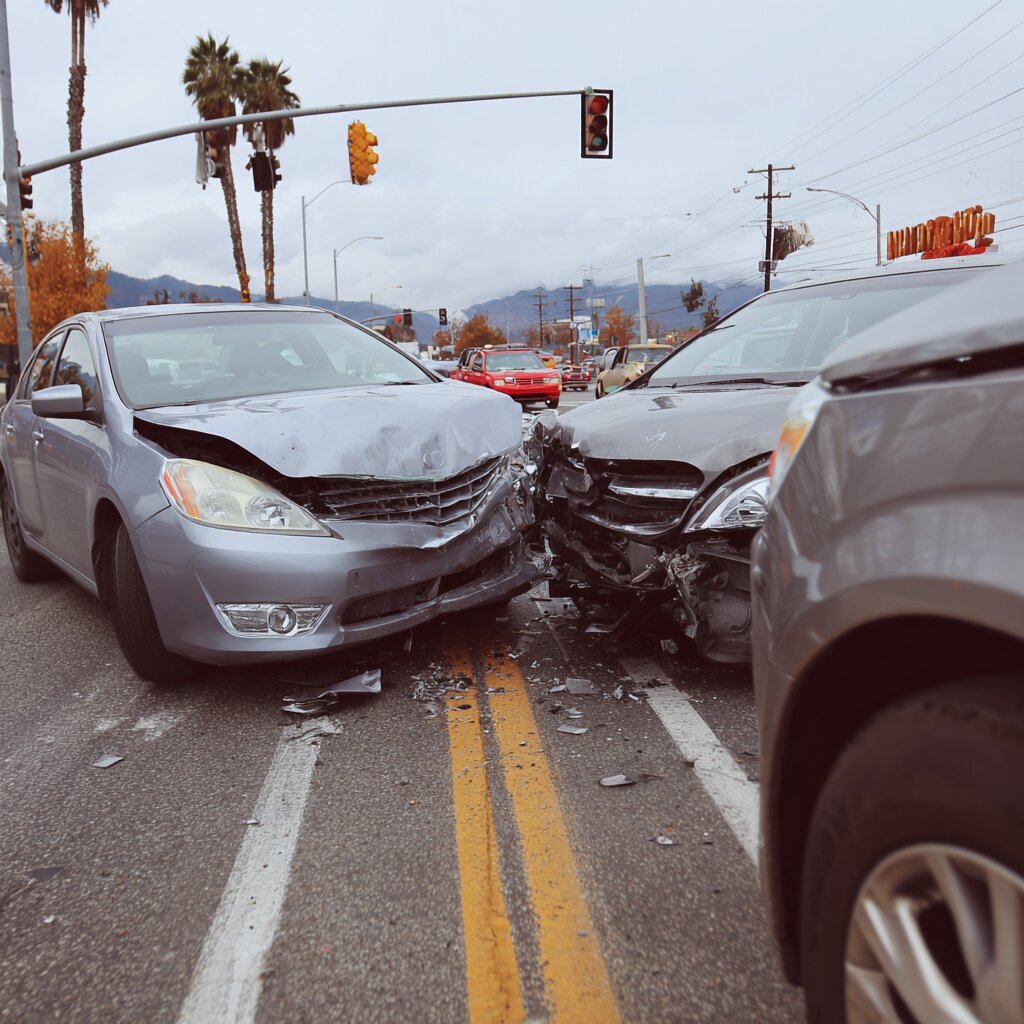
How Does Pure Comparative Negligence Affect Your Compensation?
Pure comparative negligence directly controls how much money you can recover after an accident. Your total damages get calculated first, then reduced by your percentage of fault.
Here’s how the math works in real situations:
- 10% at fault: $100,000 in damages = $90,000 recovery
- 25% at fault: $100,000 in damages = $75,000 recovery
- 50% at fault: $100,000 in damages = $50,000 recovery
- 75% at fault: $100,000 in damages = $25,000 recovery
Even if you’re found 99% responsible for the accident, you can still recover 1% of your damages from the other driver. This makes California one of the most generous states for accident victims who share some blame.
The exact percentage assigned to you becomes the most important factor in determining your final settlement or court award.
Who Decides Fault Percentages in California Car Accidents?
Several different parties can determine your fault percentage, and the process often happens in stages. Insurance adjusters make the first determination when they investigate your claim.
Insurance companies have a financial incentive to assign you as much fault as possible. The more blame they can place on you, the less money they have to pay out on your claim, which is why dealing with insurance companies after an accident requires careful strategy.
If insurance companies can’t agree on fault percentages, other decision-makers get involved:
- Insurance adjusters: Make initial fault determinations during claims investigations
- Attorneys: Negotiate fault percentages during settlement talks
- Mediators or arbitrators: Provide neutral decisions when negotiations stall
- Judges or juries: Make final fault determinations if cases go to trial
The evidence you present plays a huge role in convincing these decision-makers that the other party bears more responsibility for your accident.
What Evidence Lowers Your Fault Share
Strong evidence is your best weapon for reducing your assigned fault percentage. The more proof you have that the other driver caused the accident, the less blame gets placed on you.
Crash Scene Photos and Vehicle Damage Patterns
Take photos immediately after any accident, even if you think you might be at fault. Pictures show exactly where vehicles ended up, the damage patterns on each car, and important details like skid marks or debris.
Vehicle damage tells a story about how the crash happened. A car with front-end damage that rear-ended another vehicle suggests one type of accident, while side-impact damage indicates a completely different scenario.
Traffic and Surveillance Video Preservation
Video footage provides unbiased proof of exactly what happened during your accident. Traffic cameras, business security systems, and doorbell cameras often capture crashes as they occur.
You need to act fast to preserve this evidence. Some video systems automatically delete recordings after a limited retention period. Our experienced auto accident attorneys can send preservation letters to ensure this crucial evidence doesn’t disappear.
Black Box Data and Phone Records
Modern cars contain Event Data Recorders (EDRs) that capture information about speed, braking, and steering in the seconds before a crash. This “black box” data can prove you were driving safely when the accident occurred.
Cell phone records can be subpoenaed to show whether the other driver was texting or talking on their phone when they hit you. Distracted driving evidence significantly increases the other party’s fault percentage.
Witness Statements and Expert Reconstruction
Independent witnesses who saw your accident provide neutral testimony about what really happened. Their statements can confirm your version of events and contradict the other driver’s claims.
For complex crashes, accident reconstruction experts analyze all available evidence to create scientific models of how the collision occurred. These experts can provide definitive opinions about fault that carry significant weight with insurance companies and juries.
Common California Crashes with Shared Liability
Certain types of accidents frequently involve shared fault disputes. Insurance companies know these crash patterns and quickly look for ways to blame you, even when the other driver seems clearly responsible.
Left-Turn and Intersection Collisions
Left-turn accidents happen when one driver turns in front of oncoming traffic. While the turning driver usually bears most of the blame, you might share fault if you were speeding, distracted, or ran a yellow light.
Insurance adjusters often argue that the oncoming driver could have avoided the crash by paying better attention or slowing down. Even a small percentage of fault can cost you thousands of dollars in reduced compensation.
Rear-End and Chain Reaction Pileups
Most people assume the rear driver is always at fault in rear-end collisions, but that’s not always true. You might share blame if you had broken brake lights, stopped suddenly without reason, or were driving an unsafe vehicle.
Chain reaction car accidents with multiple vehicles create complex fault scenarios. Each driver’s actions get analyzed separately, and fault percentages can vary widely between different participants in the same crash.
Lane Change and Merging Crashes
When drivers change lanes or merge and cause accidents, fault is often shared between both parties. The merging driver might be blamed for not checking blind spots, while the other driver could be held responsible for speeding up to prevent the merge.
California’s aggressive driving culture means many lane change accidents involve some fault on both sides. Insurance companies exploit this reality to reduce their payouts.
Pedestrian and Bicycle Interactions
Accidents between vehicles and pedestrians or cyclists frequently involve shared fault arguments. A driver might be distracted and fail to yield, but a pedestrian could be jaywalking or stepping into traffic without looking.
Even when drivers are clearly at fault, insurance companies often argue that pedestrians or cyclists contributed to their own injuries by not following traffic rules or wearing safety equipment.
How Insurance Companies Use Shared Fault Against You
Insurance adjusters receive extensive training on how to use shared fault rules to minimize claim payouts. They look for any possible way to increase your percentage of responsibility for the accident.
Recorded Statements and Quick Settlement Offers
Adjusters call accident victims quickly, hoping to get recorded statements before you fully understand your legal rights. They ask leading questions designed to get you to admit some fault for what happened.
They also make fast, low settlement offers before you know the full extent of your injuries. These offers usually require you to sign releases that prevent you from seeking additional compensation later, even if your injuries turn out to be more serious than initially thought.
Seat Belt and Helmet Defenses in California
California’s “seat belt defense” allows insurance companies to reduce your compensation if you weren’t wearing a seat belt during the accident. They argue that your injuries would have been less severe with proper safety equipment.
The same logic applies to motorcycle accidents where riders weren’t wearing helmets. Even if the other driver caused the crash, your compensation gets reduced for injuries that a helmet might have prevented.
Failure to Mitigate Medical Care
If you delay getting medical treatment or don’t follow your doctor’s orders, insurance companies claim you failed to “mitigate” your damages. They argue that your injuries got worse because of your own actions, not because of the accident.
This tactic is particularly common when accident victims can’t afford immediate medical care or miss appointments due to work obligations. Insurance companies use these gaps in treatment to reduce their financial responsibility.
California Laws That Shape Shared Fault Claims
Several important California laws and court decisions create the legal framework for shared fault claims. Understanding these rules helps you protect your rights and maximize your compensation.
Civil Code 1714 and Li v. Yellow Cab
California Civil Code Section 1714 establishes that everyone is responsible for injuries caused by their negligence. The 1975 case Li v. Yellow Cab Co. created the pure comparative negligence standard that California uses today.
Before this landmark decision, California followed an all or nothing rule where any fault on your part meant no compensation. The Li case changed this harsh rule and allowed partially at-fault victims to recover damages proportional to the other party’s responsibility.
Prop 51 Joint and Several Liability Explained
When multiple parties share fault for your accident, Proposition 51 affects how damages get paid. For economic damages like medical bills and lost wages, each at-fault party only pays their specific percentage share.
For non-economic damages like pain and suffering, any single defendant can be forced to pay the full amount if other defendants can’t pay their shares. This rule protects you when one at-fault party has insurance but others don’t.
Prop 213 Limits for Uninsured Drivers
If you were driving without insurance when your accident happened, Proposition 213 severely limits your ability to recover damages. You can’t collect compensation for pain and suffering, even if the other driver was completely at fault.
This harsh rule only has narrow exceptions, such as when the other driver was under the influence of alcohol or drugs. The lesson is clear: maintaining auto insurance is essential for protecting your legal rights.
Statute of Limitations and Government Claims
California imposes strict deadlines for filing accident claims. Missing these deadlines means losing your right to compensation entirely, regardless of how strong your case might be.
| Claim Type | Time Limit | Deadline Starts |
| Personal Injury Lawsuit | 2 years | Date of accident |
| Property Damage Claim | 3 years | Date of accident |
| Government Entity Claim | 6 months | Date of accident |
| Wrongful Death Lawsuit | 2 years | Date of death |
Government entity claims have the shortest deadline and require special administrative procedures before you can file a lawsuit.
Sample Settlement Math with Shared Fault
Understanding how shared fault affects real settlement amounts helps you evaluate whether insurance offers are fair throughout the car accident settlement process. These examples show how the math works in typical California accident cases.
One Defendant Example
Imagine you suffer $150,000 in total damages from a car accident. The investigation determines you were 25% at fault for the crash because you were slightly speeding, while the other driver was 75% at fault for running a red light.
Your recovery calculation: $150,000 × 75% = $112,500
Even though you share some blame, you still recover most of your damages because the other driver was primarily responsible for the accident.
Multiple Defendants and Insurance Limits
In a three-car chain reaction accident, fault might be divided as follows: Driver A (who started the chain) 60% at fault, Driver B (middle car) 25% at fault, and you 15% at fault.
With $200,000 in total damages, you could recover: $200,000 × 85% = $170,000
However, if Driver A only has minimum insurance limits of $15,000, and Driver B has $50,000 in coverage, you might not collect the full amount despite winning a larger judgment.
This scenario shows why having uninsured motorist accident protection on your own policy is so important for protecting yourself.
Steps to Take After a Shared Fault Crash
The actions you take immediately after an accident can significantly impact fault determinations and your final compensation. Every decision matters when shared fault is likely to be an issue.
Medical Care and Documentation
Seek medical attention immediately, even if you feel fine or think you might be partly at fault. Delaying treatment gives insurance companies ammunition to argue that your injuries weren’t serious or weren’t caused by the accident.
Keep detailed records of all medical treatment, including emergency room visits, doctor appointments, physical therapy sessions, and prescription medications. These records become crucial evidence of your damages and help counter arguments that you failed to mitigate your injuries.
Evidence Preservation Timeline
Don’t delay preserving accident evidence, security footage can be lost, witnesses’ memories fade, and physical evidence at the scene can disappear.
Take photos of everything: vehicle damage, skid marks, traffic signals, road conditions, and your injuries. Get contact information from witnesses and ask them to write down what they saw while their memories are fresh.
What to Say to Adjusters
When insurance adjusters call, stick to basic facts about what happened without speculating about fault or blame. Say things like “The light was green when I entered the intersection” rather than “I don’t think I did anything wrong.”
Never agree to recorded statements without speaking to an attorney first. Adjusters are trained to ask questions that can be used against you later, even when you’re trying to be honest and cooperative.
Politely tell them you’re still recovering from the accident and need time to fully understand what happened before giving detailed statements.
How Krasney Law Accident Attorneys Fights to Reduce Your Fault
At Krasney Law Accident Attorneys, we’ve spent decades mastering California’s comparative negligence laws and the tactics insurance companies use to shift blame onto accident victims. Our personalized approach means you work directly with experienced attorneys, not just staff members or paralegals.
We conduct thorough investigations of every accident, working with accident reconstruction experts, medical professionals, and other specialists to build the strongest possible case. Our team knows how to gather and present evidence that minimizes your fault percentage and maximizes your compensation.
With offices in San Bernardino, Ontario, and Riverside, we serve clients throughout California. We understand local court systems, judges, and how insurance companies operate in different regions of the state.
Our commitment to one-on-one client service means you’ll always know what’s happening with your case and have direct access to the attorneys handling your claim.
Don’t Wait Protect Your Rights Now
After a shared fault accident, every day that passes makes your case more difficult to win. Critical evidence disappears, witness memories fade, and insurance companies use delays against you to argue that your injuries weren’t serious.
Even if you think you might be partially at fault, you still have rights under California law. Don’t let insurance companies take advantage of your uncertainty or guilt about the accident.
Contact Krasney Law Accident Attorneys today for a free consultation to learn about your rights and options. We work on a contingency fee basis, which means you pay nothing unless we recover money for you.
Our experienced team will evaluate your case, explain how shared fault rules apply to your situation, and fight to get you the maximum compensation allowed under California law. Don’t face the insurance companies alone when your financial future is at stake.
Shared Fault Car Accident Claims FAQs
If Both Drivers Are 50 Percent at Fault, Who Pays What in California?
Each driver can recover 50% of their damages from the other driver’s insurance company, so you would receive half of your total damages while paying half of the other driver’s damages through your insurance.
Can I Recover Compensation if I Am 80 to 90 Percent at Fault?
Yes, California’s pure comparative negligence rule allows you to recover 10-20% of your damages even when you’re mostly responsible for the accident, unlike states that bar recovery when you’re more than 50% at fault.
Does Prop 213 Prevent Pain and Suffering if I Was Uninsured?
Proposition 213 generally prohibits uninsured drivers from recovering non-economic damages like pain and suffering, with narrow exceptions for accidents caused by drunk drivers or other serious criminal conduct.
Will Not Wearing a Seat Belt or Helmet Reduce My Settlement?
Yes, California’s seat belt defense allows insurance companies to reduce your compensation for injuries that would have been prevented or lessened by wearing proper safety equipment.
If I Received a Traffic Ticket Can I Still Make a Claim?
A traffic citation doesn’t automatically determine civil fault, and you can still pursue compensation reduced by your percentage of responsibility as determined by the evidence, not just the ticket.
How Does Shared Fault Affect a UM or UIM Claim with My Insurer?
Your uninsured/underinsured motorist coverage claim gets reduced by your percentage of fault just like a claim against another driver’s insurance company.
Should I Agree to a Recorded Statement with the Adjuster?
Never give a recorded statement to any insurance company without first consulting an attorney, as these statements are designed to get you to admit fault and can be used against you throughout your case.
How Soon Should I Contact a Lawyer After a Shared Fault Crash?
Contact an attorney immediately after receiving necessary medical care, as early legal guidance protects crucial evidence and prevents mistakes that could increase your assigned fault percentage and reduce your compensation.

