

California Vehicle Code grants pedestrians the right of way in crosswalks and requires drivers to yield, but you must also exercise reasonable care for your own safety and cannot suddenly enter a vehicle’s path when it creates an immediate hazard.
This 2026 definitive guide to California’s pedestrian laws explains your rights in various crossing situations, recent changes such as the Freedom to Walk Act, and steps to take if you’re injured in a pedestrian accident.
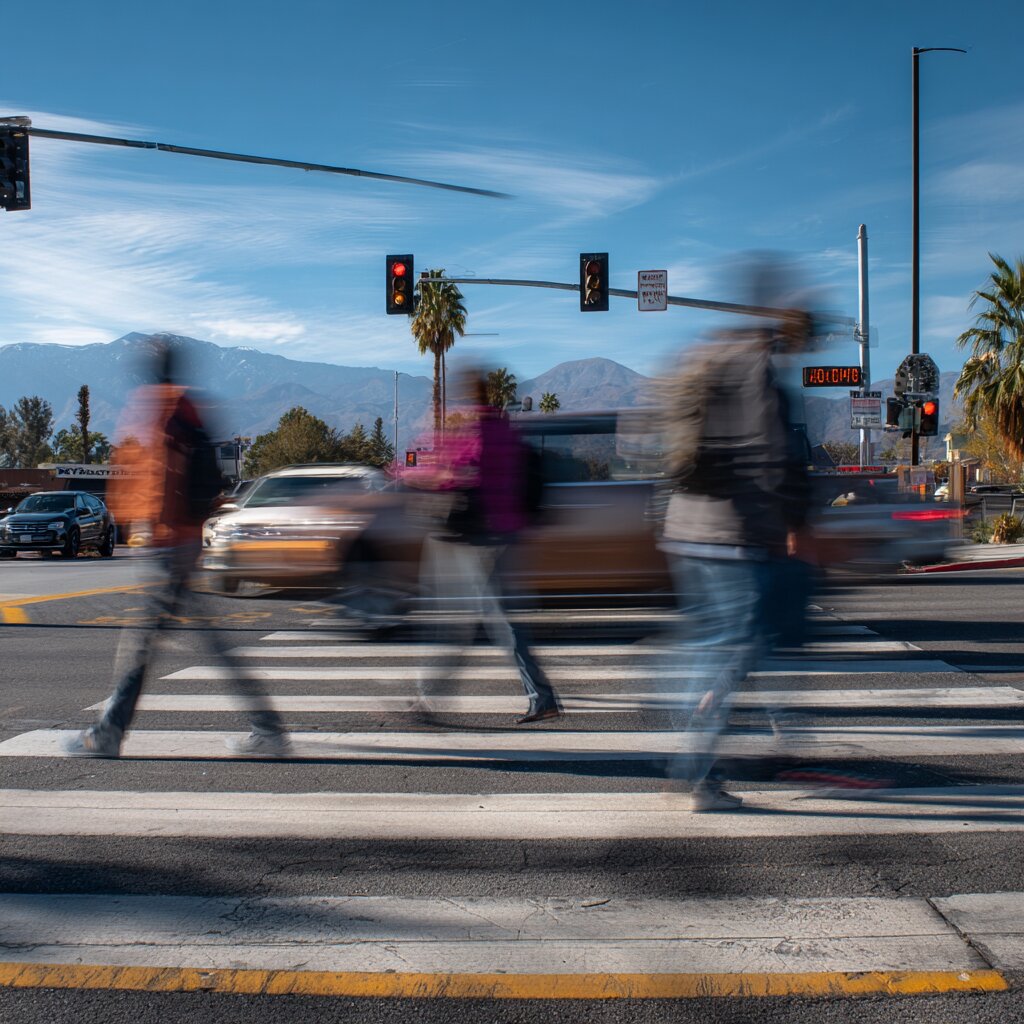
Do Pedestrians Have the Right of Way in California?
Pedestrians generally have the right of way in crosswalks, but this right comes with responsibilities. California Vehicle Code 21950 requires drivers to yield to pedestrians crossing in any crosswalk, marked or unmarked.
However, you cannot suddenly dart into traffic when a vehicle is too close to stop safely. This creates what the law calls an “immediate hazard” – a situation where even a careful driver cannot reasonably avoid hitting you.
The law creates shared duties for both parties:
- Driver’s Responsibility: Must yield to pedestrians and exercise due care to avoid collisions
- Pedestrian’s Responsibility: Cannot suddenly enter a vehicle’s path or unnecessarily delay traffic
- Mutual Obligation: Both must act reasonably to prevent accidents
Understanding these rules protects you legally and physically when walking the streets of California.
Are Unmarked Crosswalks Protected in California?
Unmarked crosswalks receive the same legal protection as painted ones. An unmarked crosswalk is the invisible extension of sidewalks across any intersection where two streets meet, even without painted lines.
California Vehicle Code 275 defines these crossing zones as legal crosswalks. They exist at most intersections unless signs specifically prohibit crossing.
Drivers must yield to you in these unmarked areas, just as at marked crosswalks. However, never assume drivers see you, especially at night or in poor weather when visibility is limited.
Do Walk and Don’t Walk Signals Control Your Right-of-Way?
Traffic signals determine when you can legally cross at controlled intersections. California Vehicle Code 21456 states you should only begin crossing when the signal shows “WALK” or a walking person symbol.
If you’re already crossing when the signal changes to a flashing “Don’t Walk” with a countdown timer, you have the right to finish crossing safely. Never start crossing during a steady “Don’t Walk” signal.
Violating these signals doesn’t automatically prevent you from recovering damages if hit, but it can reduce your compensation under California’s comparative fault rules. Insurance companies often use signal violations to shift blame onto pedestrians.
Do Blind Pedestrians Always Have the Right of Way?
Yes, blind pedestrians using a white cane or guide dog have the absolute right-of-way under California Vehicle Code 21963. This is one of the few situations where pedestrian rights are not conditional.
Drivers must yield to blind pedestrians at all intersections and crosswalks. Failing to do so carries serious consequences:
- Criminal Charges: Misdemeanor offense
- Jail Time: Up to six months
- Financial Penalties: Fines between $500-$1,000
Only blind individuals may legally carry a predominantly white cane under California Vehicle Code 21964.
Who Counts as a Pedestrian Under California Law?
California Vehicle Code 467 defines pedestrians more broadly than just people walking. The legal definition includes anyone on foot or using human-powered transportation except bicycles.
Covered as Pedestrians:
- People walking
- Wheelchair users (manual or motorized)
- Skateboard, roller skate, or non-electric scooter users
- Those using walkers, crutches, or mobility devices
Not Considered Pedestrians:
- Bicyclists
- E-scooter riders
- Hoverboard users
- Electric bike riders
This distinction matters because pedestrian protection laws apply differently to each category. Knowing your legal status affects your rights and responsibilities on California roads.
Do Drivers Have to Yield When Crossing a Sidewalk or Driveway?
Drivers must always yield to pedestrians on sidewalks when entering or exiting driveways, alleys, or parking lots. California Vehicle Code 21952 makes this requirement absolute.
This law covers common situations like backing out of residential driveways, turning into shopping centers, or exiting parking garages. The pedestrian on the sidewalk has the right-of-way, and drivers must wait for them to pass safely.
Sidewalks remain protected pedestrian zones where your rights are strongest. Drivers crossing these areas bear full responsibility for avoiding collisions.
Can You Walk in a Bike Lane or on the Roadway in California?
You generally cannot walk in bike lanes when sidewalks are available. California Vehicle Code 21966 prohibits pedestrians from using bike lanes when an “adequate pedestrian facility” exists nearby.
When no sidewalk is available, California Vehicle Code 21956 requires you to walk on the left side of the road facing oncoming traffic. This position lets you see approaching vehicles and react if necessary.
Exceptions When Bike Lane Use is Allowed:
- No sidewalk available
- Sidewalk blocked or impassable
- Crossing to reach the other side
Stay as far from traffic as practical and wear bright or reflective clothing at night for maximum visibility.
Can Drivers Legally Block Crosswalks or Sidewalks?
No, drivers cannot unnecessarily block crosswalks or sidewalks. California Vehicle Code 21970 prohibits stopping vehicles in a manner that obstructs both marked and unmarked crosswalks.
Common violations include stopping in crosswalks while waiting at red lights or blocking crosswalks when turning right on red. These actions force pedestrians into dangerous positions outside protected crossing areas.
Similarly, parking that blocks sidewalks violates local parking codes and impedes safe passage, especially for people with mobility challenges or those who use wheelchairs.
What Did the Freedom to Walk Act Change About Jaywalking?
The Freedom to Walk Act (Assembly Bill 2147) took effect January 1, 2023, changing how California treats jaywalking. Police can no longer ticket you for crossing outside crosswalks unless crossing creates immediate danger.
What Changed:
- No more jaywalking citations for safe mid-block crossing
- Police must prove “immediate danger” to cite pedestrians
- Focus shifted from location to the safety of crossing
What Remained the Same:
- Civil liability rules unchanged
- You must still yield to traffic when crossing mid-block
- Comparative fault still applies if you’re hit while jaywalking
This law doesn’t give you permission to cross carelessly anywhere – it simply removes automatic penalties for safe crossing outside crosswalks.
What Does the Daylighting Law Mean at Crosswalks?
Assembly Bill 413, effective January 1, 2025, creates “daylighting” zones near crosswalks to improve visibility. This law prohibits parking within a specific distance of crosswalk approaches to keep sightlines clear.
| Crosswalk Type | No Parking Distance |
| Standard crosswalk | 20 feet from approach |
| With curb extension | 15 feet from approach |
These rules apply even without red curb paint or signs after the effective date. The law recognizes that obstructed sightlines contribute to pedestrian accidents at dangerous intersections and aims to prevent such hazardous situations.
What Happens if You Are Partly at Fault?
California uses pure comparative negligence to assign fault in accidents. This means you can still recover compensation even if you were partially responsible for the incident.
Your total compensation will be reduced in proportion to your percentage of fault in the accident.
Common Shared Fault Scenarios:
- Crossing against a signal while the driver was speeding
- Jaywalking when the driver was distracted or drunk
- Wearing dark clothes at night outside crosswalks
Insurance companies often try to shift more blame onto pedestrians to reduce payouts, knowing that pedestrians can share fault for accidents under California law. Having experienced legal representation ensures fault is assigned fairly based on actual evidence.
What Damages Can You Recover After a Pedestrian Accident?
California law allows you to recover various types of compensation after a pedestrian accident caused by someone else’s negligence. These damages fall into clear categories that address different aspects of your losses.
Economic Damages (Calculable Financial Losses):
- Past and future medical expenses
- Lost wages from missed work
- Reduced future earning capacity
- Property damage to personal items
Non-Economic Damages (Quality of Life Impacts):
- Physical pain and suffering
- Emotional distress and trauma
- Loss of enjoyment of life
- Permanent disfigurement or disability
Punitive damages may be available if the driver was extremely reckless, such as driving drunk or street racing. These damages punish wrongdoers and deter similar behavior.
What Should You Do After a Pedestrian Accident?
The moments following a pedestrian accident are critical for protecting your legal rights and preserving evidence, especially since pedestrian accidents can cause devastating injuries requiring extensive medical treatment. Insurance companies begin building their defense immediately, while crucial evidence can disappear within hours or days.
Immediate Actions to Take:
- Call 911:Creates an official record and ensures medical response
- Document Everything: Photo injuries, vehicles, license plates, traffic signals, and scene conditions
- Gather Information: Driver details, witness names, and contact information, responding officers
- Preserve Evidence: Note nearby security cameras that may have captured the incident
- Seek Medical Care: Even if you feel fine, adrenaline can mask serious injuries like concussions
Critical Don’ts:
- Don’t give recorded statements to insurance companies
- Don’t accept quick settlement offers before understanding your injuries and the car accident settlement process in California.
- Don’t delay medical treatment
Because surveillance footage can be deleted quickly, it’s important to act promptly to preserve this crucial evidence.
Injured in a Pedestrian Accident? Get Legal Help Today
If you’ve been injured as a pedestrian, you’re facing physical pain, mounting medical bills, and pressure from insurance adjusters trying to minimize your claim. You don’t have to navigate this complex process alone.
Krasney Law Accident Attorneys provides personalized legal support to injured pedestrians throughout California. We handle all insurance communications, preserve critical evidence before it disappears, and fight for maximum compensation while you focus on healing.
Our skilled pedestrian accident attorneys work on a contingency fee basis; you pay nothing unless we recover money for you.
Contact us today at (909) 380-7200 for your free consultation. Don’t let insurance companies take advantage of you or allow crucial evidence to disappear.
Pedestrian Rights in California FAQs
Can I Use My Own Auto Insurance if I Was Hit as a Pedestrian?
Yes, your Uninsured or Underinsured Motorist coverage typically applies when you’re hit by a car while walking. This coverage can help if the driver lacks adequate insurance or flees the scene.
What if the Driver Was Uninsured or Fled the Scene?
You may still recover compensation through your own auto insurance UM/UIM coverage, victim compensation programs, or claims against vehicle owners or employers of at-fault drivers.
How Quickly Must I Act to Preserve Security Camera Footage?
Act immediately; businesses may retain surveillance footage for only a short time, so preserve it as soon as possible. An attorney can send preservation letters to prevent this crucial evidence from being lost forever.
Do Government Vehicle Accidents Have Different Deadlines?
Yes, accidents involving government vehicles or dangerous road conditions typically require filing a formal claim within six months, which is much shorter than the standard two-year deadline.
Should I Give a Recorded Statement to Insurance Adjusters?
No, politely decline and contact an attorney first. Insurance adjusters use these statements to find ways to deny or minimize your claim, often trying to blame you for an accident that wasn’t your fault by taking your words out of context.
Are E-Scooter Riders Considered Pedestrians in California?
No, California Vehicle Code 467 does not classify e-scooter riders as pedestrians. They follow different traffic rules and don’t receive the same crossing protections as people walking.
Can I Still Get Compensation if Police Said I Was Jaywalking?
Yes, jaywalking may reduce, but doesn’t eliminate your claim under California’s comparative fault system. Many successful cases involve pedestrians initially blamed for accidents.
Does a Flashing Countdown Signal Mean I Can Start Crossing?
No, only begin crossing on a steady “Walk” signal. Flashing countdown signals mean finish crossing if you’ve already started, but don’t enter the crosswalk.

