

Witness testimony in a California truck accident claim is any statement given by a person who observed the crash, its causes, or its effects. That includes bystanders at the scene, passengers in the vehicles involved, first responders, and paid experts hired to analyze the evidence.
When a trucking company’s insurer disputes fault or tries to shift blame onto you, witness accounts are often the most direct way to prove what actually happened.
Because California uses a pure comparative negligence rule, the percentage of fault assigned to you directly reduces your financial recovery. Witness testimony is one of the most effective tools for keeping that percentage low and your compensation high.
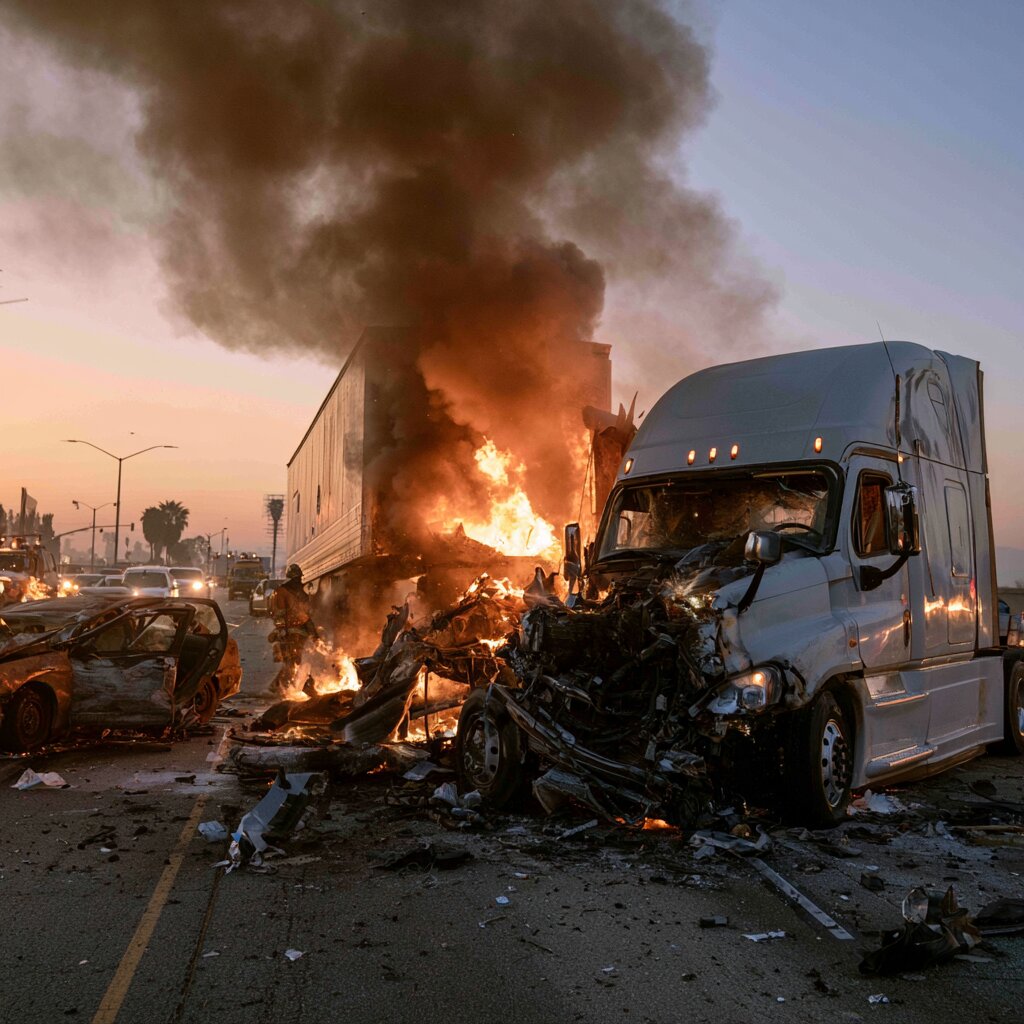
What Types of Witnesses Help a Truck Accident Claim?
Truck accident cases typically rely on several categories of witnesses, each contributing a different piece of the picture. The more independent the witness — meaning the less connection they have to either driver — the more weight their account carries with insurers and juries.
Eyewitnesses and Bystanders
Eyewitnesses are people who saw the crash happen in real time, such as nearby drivers, pedestrians, cyclists, or employees at adjacent businesses. They can confirm which vehicle had the right of way, whether the truck was speeding, or whether the driver crossed lane lines before impact.
Passengers in the Vehicles Involved
Passengers in your vehicle or other cars involved in the crash can describe pre-collision behavior like distracted driving, sudden hard braking, or an unsafe merge. Insurance companies may view them as less neutral, but their testimony still holds significant legal weight.
First Responders at the Scene
California Highway Patrol (CHP) officers, paramedics, and firefighters typically do not witness the crash itself, but they document scene conditions, vehicle positions, and any statements made by the drivers immediately after impact. These observations become part of the official record used throughout your claim.
Expert Witnesses
An expert witness is a professional with specialized training who interprets technical evidence that a jury could not evaluate on their own. In California truck accident cases, expert witnesses commonly include:
- Accident reconstructionists: Recreate how the crash occurred using skid marks, vehicle damage, and physics.
- Medical experts: Explain the cause and long-term cost of your injuries.
- Trucking industry experts: Identify violations of federal safety rules, such as hours-of-service regulations.
- Mechanical engineers: Analyze brake, tire, or equipment failures on the truck.
- Economic experts: Calculate your lost wages and future financial losses.
What Makes a Witness Credible in a Truck Crash Case?
Credibility is what determines whether a judge, jury, or insurance adjuster actually believes what a witness says. A highly credible witness has no personal connection to either driver, a clear and unobstructed view of the crash, and specific recall of details like the truck’s position, speed, and the sequence of events.
Defense attorneys will actively look for reasons to discredit your witnesses. Common red flags they use include:
- Personal connection: The witness is a friend or family member of either driver.
- Obstructed view: The witness was too far away or had a blocked line of sight.
- Inconsistent statements: The witness’s story changed between the scene and a later interview.
- Impairment: The witness was under the influence at the time of the crash.
An experienced truck accident attorney knows how to identify and address these vulnerabilities before the defense raises them.
What to Do If There Are Witnesses After a Truck Crash
Witnesses are not legally required to stay at the scene or give a statement, so a polite and immediate request matters. If your injuries prevent you from gathering information yourself, ask a passenger or bystander to collect contact details from anyone who stopped to watch.
When you are able to speak with a witness safely, keep your questions simple and open-ended:
- Where were you when the crash happened?
- What did you see in the seconds before the impact?
- Did you notice the truck doing anything unusual before the collision?
- Can I have your name, phone number, and email address?
A useful written statement should include the witness’s full contact information, the exact location and time of the crash, a description of where the witness was standing, and a step-by-step account of what they observed. If the witness agrees, recording their statement on your phone preserves tone and detail that written notes often miss — just remember that California is a two-party consent state, which means you must get their permission before recording.
How Witness Testimony Is Used Throughout Your Claim
Most California truck accident cases settle before going to trial, which means witnesses are far more likely to give a recorded statement or a formal deposition than to ever appear in a courtroom. A deposition is a formal, sworn interview conducted by both sides’ attorneys, usually held at a law office. What a witness says in a deposition is locked in and often becomes the deciding factor that pushes the trucking company to settle.
| Stage | Setting | Under Oath? | Typical Use |
| Initial Statement | In person or by phone | No | Preserves fresh memory and establishes basic facts |
| Deposition | Attorney’s office | Yes | Locks in testimony; often drives settlement |
| Trial Testimony | Courtroom | Yes | Used only if the case does not settle |
How Witness Testimony Works with Trucking Evidence
Witness statements are most powerful when combined with the physical and electronic evidence unique to commercial truck cases. A witness who says “the truck never braked” becomes far more persuasive when the truck’s own computer confirms it.
- ELD and black box data: Commercial trucks are required to carry an Electronic Logging Device (ELD) that records driver hours, and an ECM (black box) that captures speed, braking, and throttle data in the seconds before impact. This data can be overwritten quickly, so preservation letters should be sent immediately.
- Driver logs and qualification files: Hours-of-service logs can reveal dangerous fatigue or falsified records, giving important context to a witness’s account of erratic driving.
- Maintenance and inspection records: If a witness saw smoke from the brakes or heard a tire blow, maintenance logs can confirm the trucking company ignored known mechanical problems.
- Surveillance and dashcam footage: Video from nearby businesses or the truck’s dashcam can be overwritten quickly, so it’s critical to act promptly to preserve any footage.
When witness accounts and hard data align, the trucking company’s insurer has very little room to dispute fault.
What If There Are No Neutral Witnesses?
The absence of independent witnesses does not end your claim. California truck accident cases can still be proven through physical evidence, ELD data, expert accident reconstruction, and surveillance footage alone. This is exactly where an experienced attorney’s investigation becomes essential — the sooner you have legal representation from our skilled California truck accident lawyers, the more evidence can be preserved before it disappears.
How a Lawyer Secures and Protects Witness Testimony
Even strong witnesses need professional handling to be effective in a legal claim. Here is what an attorney does that you simply cannot do alone while recovering from a serious injury:
- Locates additional witnesses through scene canvassing, business camera review, and CHP report follow-up.
- Conducts formal interviews that draw out details bystanders might not think to volunteer on their own.
- Prepares witnesses for depositions so they are not caught off guard by aggressive defense attorney tactics.
- Issues subpoenas to legally compel testimony from reluctant or uncooperative witnesses.
- Sends preservation letters immediately to lock down ELD data, dashcam footage, and maintenance records before the trucking company destroys them.
Trucking companies and their insurers move fast after a crash to protect their interests. Having an attorney move just as fast on your behalf levels the playing field.
Act Fast! California Deadlines for Truck Accident Claims
California Code of Civil Procedure § 335.1 gives you two years from the date of the crash to file a personal injury lawsuit. If your crash involved a government entity, such as a city bus or a state-owned truck, you must file an administrative claim within just six months.
The practical deadline to gather strong witness testimony, however, is much shorter. Memories fade, witnesses move away, and electronic truck data gets overwritten. Waiting to act means losing the evidence you need to win.
Injured in a Truck Crash? Talk to Krasney Law Accident Attorneys Today
At Krasney Law Accident Attorneys, we have decades of experience representing truck accident victims across California, with offices in San Bernardino, Ontario, and Riverside. We believe every client deserves direct, personal attention, you work one-on-one with a dedicated advocate, not a case manager at a large firm where your file gets lost in the shuffle.
We handle witness identification, evidence preservation, and aggressive negotiations with trucking insurers so you can focus on your recovery. We work on a contingency fee basis, which means you pay nothing unless we recover compensation for you. Contact us today for a free consultation to talk about your case and find out how we can help you fight for the full compensation you deserve.
FAQs About Witness Testimony in California Truck Accident Claims
Do I Need an Independent Witness to Win a Truck Accident Claim in California?
You do not strictly need an independent witness to win your claim. Physical evidence, ELD data, and expert accident reconstruction can establish fault even without a bystander’s account.
Can I Record a Witness Statement on My Phone in California?
California is a two-party consent state, which means you must get the witness’s clear permission before recording any audio or video. Recording without consent is illegal and could hurt your case.
Will a Witness Have to Testify in Court?
Most witnesses only need to give a recorded statement or a deposition, since the vast majority of California truck accident cases settle before reaching a courtroom. Trial testimony is the exception, not the rule.
What Happens If a Witness Changes Their Story Before Trial?
Early, signed statements carry far more legal weight than later versions where details shift. This is why locking in witness testimony as quickly as possible after the crash is so important to protecting your claim.
What If the Trucking Company’s Insurer Contacts My Witnesses Directly?
The defense team may contact your witnesses to twist their words or discourage cooperation. Having your own attorney manage and protect your witnesses throughout the process prevents this from damaging your case.

