

Being blamed for a car accident you didn’t cause is both frustrating and surprisingly common in California. Understanding why this happens helps you prepare to fight back effectively.
Insurance companies use several tactics to shift blame away from their policyholder and onto you:
- Profit Protection Strategy: Every percentage of fault they can assign to you directly reduces what they have to pay out in damages.
- Quick Settlement Pressure: They contact you immediately after the crash, hoping to get statements before you understand your injuries or legal rights.
- Evidence Manipulation: Adjusters may downplay evidence that favors you while emphasizing any detail that suggests you contributed to the accident.
The other driver involved may also lie about what happened. They might fear getting a traffic ticket, worry about their insurance rates increasing, or simply want to avoid taking responsibility for the damage they caused.
Police reports can contain errors that unfairly blame you. Officers arriving at a chaotic accident scene don’t always capture every detail correctly, and their initial assessment might be based on incomplete information or statements from stressed drivers.
Determining liability is essential after a car crash because under California’s comparative negligence law, even a small percentage of fault assigned to you directly reduces your compensation, which is why insurers work aggressively to find ways to blame you for accidents you didn’t cause.
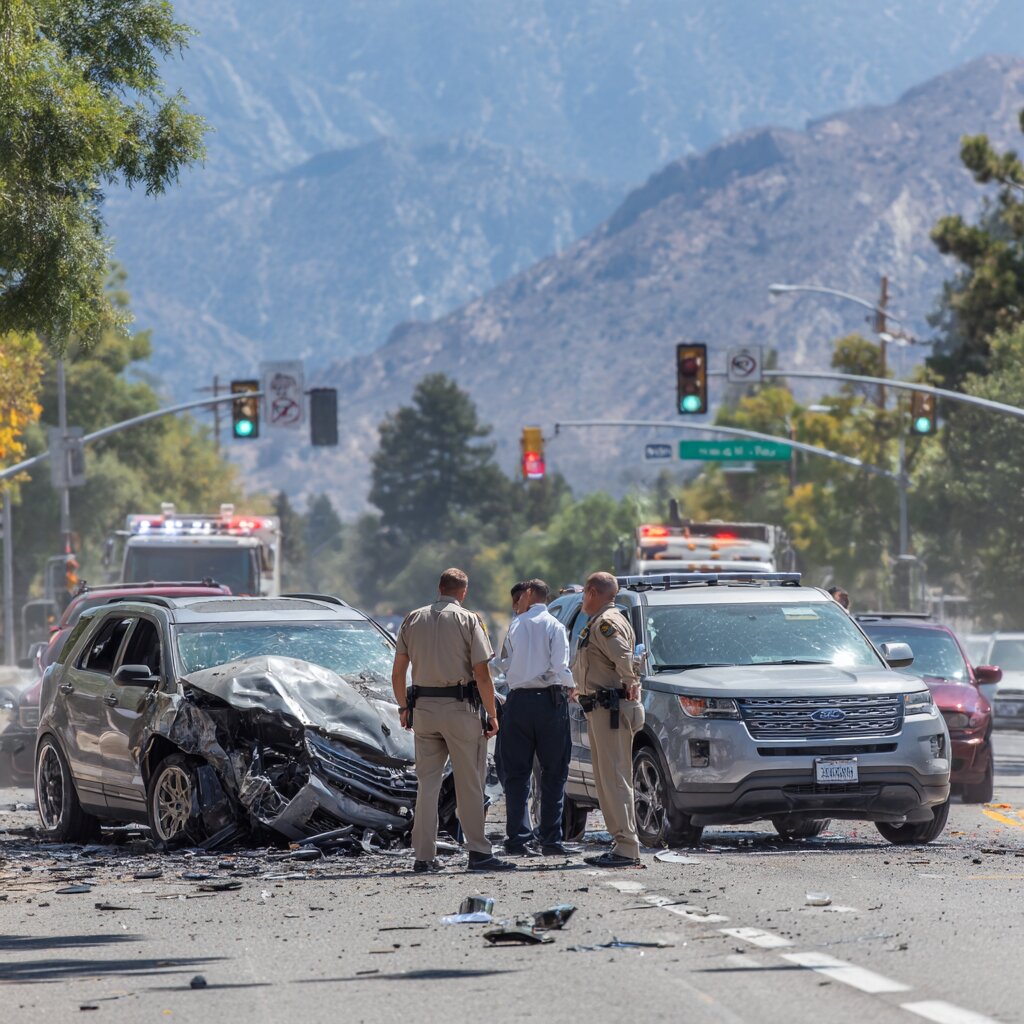
How to Prove the Crash Wasn’t Your Fault
Building a strong case requires combining official documentation with physical and digital evidence. The goal is to create an undeniable picture of what really happened.
Use Police Reports and How to Correct Errors
Obtain a copy of the police report within a week of the accident. Most departments make reports available online or at their records division for a small fee.
Review every detail carefully, including the officer’s narrative, accident diagram, and any witness statements. Look for errors in vehicle positions, road conditions, or the sequence of events described.
If you find mistakes, contact the reporting officer immediately to request corrections. Provide any evidence that supports your position, such as photos or witness statements.
While officers can’t always change their fault determination, they can add supplemental reports that clarify important details.
Secure Video, EDR, and Phone Records
Modern vehicles and infrastructure create digital evidence that can definitively prove what happened. Your attorney can help secure this critical information before it disappears.
Event Data Recorders (EDRs) act like airplane black boxes, capturing vehicle speed, braking patterns, and steering inputs in the seconds before impact. This data can prove whether you were speeding, following too closely, or driving recklessly.
Surveillance footage from traffic cameras, business security systems, and residential cameras provides unbiased evidence of the crash. Your attorney can send preservation letters to ensure this footage isn’t erased before it can be reviewed.
Cell phone records can show whether the other driver was texting or talking at the time of the accident. Subpoenaing these records often reveals distracted driving as the cause of the crash.
Hire Accident Reconstruction Experts
Complex accidents with disputed fault may require expert analysis. Accident reconstruction specialists use physics and engineering principles to analyze physical evidence and determine exactly how the crash occurred.
These experts examine skid marks, vehicle damage patterns, road conditions, and impact angles to create scientific models of the accident. Their testimony can definitively prove your innocence when fault is disputed.
Does California Law Allow Recovery If You Are Partly Blamed?
California follows a pure comparative negligence system. This means you can still recover compensation even if you’re found partially at fault for the accident.
Your total compensation gets reduced by your percentage of fault. Under California’s pure comparative negligence rule, your compensation is reduced by whatever percentage of fault is assigned to you. If you’re found partly at fault, your compensation will be reduced by your percentage of fault.
This system explains why insurance companies fight so hard to assign you even a small percentage of blame. Every point of fault they can pin on you saves them money. When the accident truly isn’t your fault, you deserve 100% of your damages, and protecting that right requires immediate action.
Should You Talk to the Other Driver’s Insurer?
The other driver’s insurance adjuster may contact you quickly after the accident, often presenting themselves as helpful and concerned about your welfare. Remember that their primary job is to protect their company’s financial interests, not to help you.
Here’s how to handle different types of contact:
| Communication Type | Risk Level | Recommended Response |
| Basic claim notification | Low | Provide only essential facts: your name, accident date/location, and contact information |
| Recorded statement request | High | Politely decline until you have legal representation |
| Medical record authorization | High | Never sign blanket authorizations that give access to your entire medical history |
| Settlement offer | Medium | Don’t accept or negotiate without consulting an attorney first |
Any recorded statement you give can be used against you later. Adjusters are trained to ask leading questions that can make you appear partially at fault, even when you’re completely innocent.
Should You Use Your Insurance or Theirs?
When your car needs repairs after an accident that wasn’t your fault, you have two options for handling the claim. Each approach has advantages and disadvantages you should understand.
Using the at-fault driver’s insurance means you won’t pay a deductible, but you may face delays and disputes over repair costs throughout the car accident settlement process. Their adjuster might try to use cheaper aftermarket parts or argue that some damage existed before the accident.
Using your own collision coverage typically results in faster repairs and less hassle. You’ll pay your deductible upfront, but your insurance company will recover this amount from the at-fault driver’s insurer through subrogation.
Your insurance company has a financial incentive to recover its costs, so it’ll aggressively pursue the other driver’s insurer. This often results in better outcomes than trying to deal directly with the at-fault driver’s insurance.
Will Your Rates Go Up If You Are Not at Fault in California?
California law specifically protects drivers from rate increases when they’re not at fault for an accident. Under Proposition 103, insurance companies cannot raise your premiums unless they can prove you were the substantial cause of the accident.
To increase your rates, your insurer must demonstrate that you were more than 50% responsible for the crash. If you’re not deemed the substantial cause of the crash, your insurance rates generally should not increase.
However, having multiple not-at-fault claims on your record might make you appear “accident-prone” to insurers. While they can’t raise your rates, they might choose not to renew your policy when it expires.
Who Decides Fault and How Are Disputes Resolved?
Fault determination follows a structured process that can escalate through multiple levels if parties disagree on responsibility.
Insurance adjusters from both companies conduct initial investigations and make preliminary fault determinations, following established procedures for determining fault in an auto accident. They review police reports, interview drivers and witnesses, and examine vehicle damage to assign percentages of responsibility.
When insurance companies disagree on fault allocation, they may use arbitration to resolve the dispute. A neutral arbitrator reviews all evidence and makes a binding decision about fault percentages.
If you disagree with the insurance company’s fault determination, your attorney can file a lawsuit. A judge or jury will then evaluate all the evidence and make the final determination about fault and damages.
What Damages Can You Recover If You Were Not at Fault?
California law allows you to seek compensation for all losses resulting from an accident that wasn’t your fault. These damages fall into several categories that address different types of harm.
Economic damages cover your measurable financial losses:
- Medical Expenses: All costs for emergency care, hospital stays, surgery, medication, physical therapy, and future medical needs.
- Lost Income: Wages missed due to injury, plus any reduction in future earning capacity.
- Property Damage: Vehicle repairs or replacement, plus damage to personal items in your car.
Non-economic damages compensate for intangible losses that significantly impact your quality of life:
- Physical Pain and Suffering: Ongoing discomfort, limitations in daily activities, and reduced enjoyment of life.
- Emotional Distress: Anxiety, depression, PTSD, and fear of driving that often follow serious accidents.
- Loss of Consortium: Impact on your relationship with your spouse or partner.
Punitive damages are rare but possible in cases involving extreme recklessness, such as drunk driving or road rage incidents. These damages punish the wrongdoer and deter similar behavior.
What to Do Immediately After a Car Accident
The actions you take in the first hours after a crash often determine whether you can successfully fight false blame, making it crucial to understand what to do after a car accident in California. Evidence disappears quickly, and insurance companies start building their case against you immediately.
Call 911 and Seek Medical Care
Always call 911 to create an official record of the accident. A responding police officer provides neutral documentation of the scene, vehicle positions, and initial statements from all parties involved.
Seek medical attention immediately, even if you feel fine. Adrenaline masks pain from injuries like whiplash, concussions, and soft tissue damage. Delaying medical care gives insurance companies ammunition to argue your injuries weren’t caused by the crash or aren’t as serious as you claim.
Document the Scene and Vehicles
Your smartphone becomes your most important tool for gathering evidence. Take comprehensive photos and videos while you’re still at the scene.
Focus on capturing these critical details:
- Vehicle Damage: Photograph all vehicles from multiple angles, showing impact points and the severity of damage.
- Road Evidence: Capture skid marks, debris patterns, and any tire marks that show vehicle paths.
- Scene Overview: Take wide shots showing vehicle positions, traffic signs, signals, and road conditions.
- Your Injuries: Document any visible injuries, bruises, or cuts, no matter how minor they appear.
Get Witness and Camera Sources
Independent witnesses carry tremendous weight because they have no financial interest in the outcome. Ask anyone who saw the crash for their name and phone number, and request a brief statement about what they observed.
Look for potential video sources in the area. Security cameras from nearby businesses, traffic cameras at intersections, and even residential doorbell cameras might have captured the accident.
This footage often gets erased within days or weeks, so identifying these sources quickly is crucial.
Avoid Admitting Fault or Recorded Statements
Never admit fault or apologize at the scene, as even innocent statements like “I’m sorry” can be twisted into admissions of guilt. Stick to factual observations about what happened without speculating about causes.
You have no legal obligation to provide a recorded statement to the other driver’s insurance company. Politely decline their request and explain that you’ll provide information through your car accident attorney.
These recorded statements are designed to trap you into saying something that can be used against you later.
Deadlines To File Car Accident Claims California
Time works against you after a car accident, and missing critical deadlines can destroy even the strongest case. California law imposes strict time limits that you must meet to preserve your right to compensation.
Evidence preservation has the shortest window. Surveillance footage is automatically erased after days or weeks, witness memories fade, and physical evidence at the crash scene disappears quickly.
Government claims have special requirements. If a government vehicle or employee caused your accident, you may need to file a formal claim with the appropriate agency and consult an attorney promptly to learn the applicable deadline.
Personal injury lawsuits must be filed before the applicable statute of limitations expires. This statute of limitations is absolute. Missing this deadline by even one day typically means losing your right to sue forever.
Property damage claims are subject to statutes of limitations, so it’s important to understand how to file a car accident claim and start the process promptly. While this seems generous, starting the legal process early ensures you don’t accidentally miss this deadline while dealing with injuries and recovery.
Wrongly Blamed for a Crash in California? Talk to Krasney Law Accident Attorneys Today
Being falsely blamed for an accident you didn’t cause creates enormous stress and financial pressure. At Krasney Law Accident Attorneys, we’ve spent decades fighting back against insurance companies’ tactics and proving our clients’ innocence in disputed-fault cases.
Our statewide practice serves accident victims throughout California with personalized, one-on-one attention, ensuring your case receives the focused advocacy it deserves. We understand the unique challenges of California’s comparative negligence system and know how to build compelling cases that prove your innocence.
We work exclusively on a contingency fee basis, meaning you pay no attorney fees unless we successfully recover compensation for you. This arrangement allows you to access experienced legal representation without upfront costs while you focus on recovering from your injuries.
Don’t let insurance companies bully you into accepting blame for an accident you didn’t cause. Getting an attorney for a car accident can protect your rights and ensure fair treatment.
Contact Krasney Law Accident Attorneys today for a free consultation to learn how we can fight for the truth and secure the full compensation you deserve.
FAQs
Can You Be Sued for a Car Accident That Wasn’t Your Fault?
Yes, anyone can file a lawsuit regardless of actual fault, but if evidence clearly shows you weren’t responsible, their case should fail in court. Having legal representation ensures you’re properly defended and can even file a countersuit to recover your damages and legal costs.
How Do You Prove You’re Not at Fault in a California Car Accident?
You prove innocence by gathering comprehensive evidence, including photos, witness statements, police reports, and potentially expert testimony from accident reconstruction specialists. Video footage from traffic or security cameras provides the strongest evidence, so securing it quickly is crucial.
What Should You Do If Insurance Blames You for an Accident You Didn’t Cause?
Submit a formal dispute letter with all supporting evidence and demand reconsideration of their fault determination. If they refuse to change their position, your attorney can escalate the dispute through arbitration or file a lawsuit to have a judge or jury decide fault.
Do You Have to Give a Recorded Statement to the Other Driver’s Insurance?
No, you have no legal obligation to provide a recorded statement to the other party’s insurance company. It’s always in your best interest to politely decline and consult with an attorney first, as these statements are designed to find ways to blame you for the accident.
What If the Other Driver Lies About What Happened in the Accident?
Document everything you can remember about the crash and gather independent evidence like photos, witness statements, and video footage. Your attorney can investigate the other driver’s claims and often uncover evidence that contradicts their false statements, such as cell phone records showing distracted driving.

