

If your car was totaled in an accident that wasn’t your fault in California, you have the right to file a property damage claim against the at-fault driver’s liability insurance and receive the actual cash value of your vehicle, including sales tax and transfer fees.
California is an at-fault state, meaning the driver who caused the crash is financially responsible for your losses. If their insurer disputes fault, underpays your claim, or the driver has little to no insurance, you have legal options to fight back.
What you do in the days following the crash directly affects how much you recover. Insurance adjusters move quickly, and without the right information, it is easy to accept a settlement that does not fully cover your vehicle, your rental car costs, or your injuries.
This guide covers everything you need to know, from how California determines a total loss and calculates your car’s value to what happens if you still owe money on the vehicle and when to call an attorney.
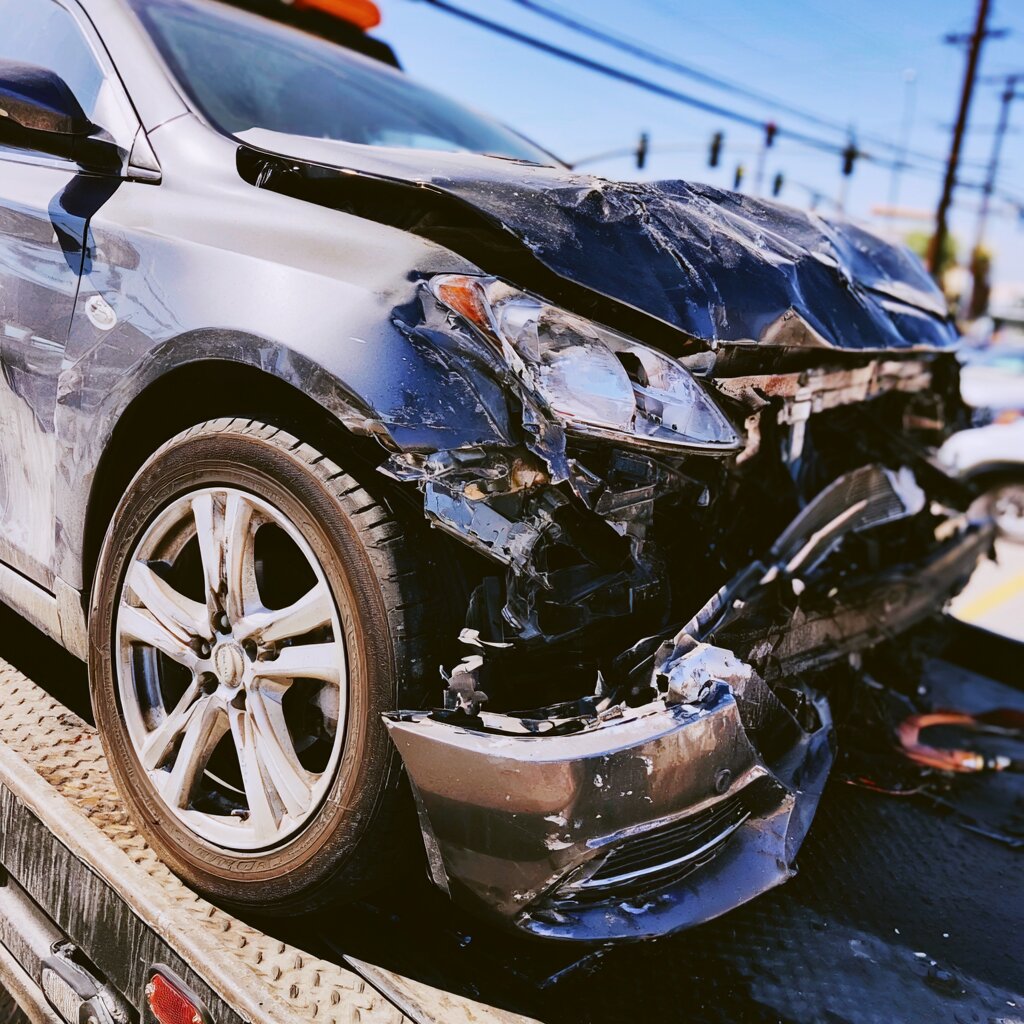
What Should You Do Right After Your Car Is Totaled?
Call 911 and Get a Police Report
A police report creates an official record of what happened and who was at fault. Even if you feel fine, get medical attention right away; adrenaline commonly masks serious injuries like whiplash or concussions that show up days later.
Photograph Everything and Get Witness Information
Take photos of both vehicles, road conditions, skid marks, and any traffic signs before anything is moved. Get names and phone numbers from witnesses at the scene, and note any nearby businesses or homes with security cameras; ask that any relevant footage be preserved promptly.
Do Not Give a Recorded Statement to the Other Driver’s Insurer
The at-fault driver’s adjuster will likely call you within a day or two. You have no legal obligation to give them a recorded statement, and doing so often gives them material to reduce your payout.
When Is a Car Considered a Total Loss in California?
A car is considered a total loss when the cost to repair it is too high relative to what the car is actually worth. California uses the Total Loss Formula (TLF) to make this determination.
The TLF works like this: if the cost of repairs plus the salvage value of the wrecked car equals or exceeds the ACV, the insurer declares it a total loss. The ACV is the fair market value of your vehicle immediately before the crash, factoring in depreciation.
Insurers calculate ACV by weighing several factors:
- Year, make, model, and trim: More recent and higher-trim vehicles hold more value.
- Mileage and condition: Lower miles and good pre-accident condition increase your ACV.
- Recent repairs or upgrades: Keep receipts for major work like new tires or a transmission — these can raise your payout.
- Local comparable sales: Insurers look at what similar vehicles are selling for in your area right now.
One important thing to know: a totaled car may still be drivable. “Totaled” is a financial label, not a mechanical one.
Who Pays When the Accident Wasn’t Your Fault?
California is an at-fault state, which means the driver who caused the crash is responsible for paying for your vehicle and your injuries. You file a property damage claim directly against their liability insurance.
There is a catch, though. California’s minimum property damage liability limit may be insufficient to cover the full value of many vehicles.
California also follows pure comparative negligence, which means your payout is reduced by whatever percentage of fault is assigned to you. If you are found 20% at fault, you receive 20% less. Insurance companies use this rule aggressively to shift blame and pay you less, even when the other driver clearly caused the crash.
If the at-fault driver has no insurance, you may need to rely on your own Uninsured Motorist Property Damage (UMPD) coverage, an optional add-on that covers your vehicle when the other driver can’t.
Should You File With Your Own Insurance or the At-Fault Driver’s?
You have two options: file through the at-fault driver’s liability insurance or use your own collision coverage. Each path has real trade-offs.
| Your Collision Coverage | At-Fault Driver’s Liability | |
| Speed | Faster | Slower — fault must be confirmed |
| Deductible | You pay upfront | No deductible |
| Rental Car | Only if you added rental coverage | Loss of use is covered |
| Fault Disputes | Minimal | Very common |
| Rate Impact | Protected under Prop 103 if not at fault | None |
If you file through your own insurance, your insurer will pursue the at-fault driver’s insurer through a process called subrogation, meaning they recover the money they paid you, including reimbursing your deductible, on your behalf.
How Do California Insurers Calculate Your Car’s Actual Cash Value?
The ACV calculation is where most disputes begin. Insurers base ACV on what a comparable vehicle would sell for in your local California market the day before the accident, not what you paid for it or what you still owe on it.
Under California’s Fair Claims Settlement Practices Regulations, your total loss settlement must include sales tax, title fees, and vehicle transfer fees on top of the ACV. Many drivers never know this, and some insurers quietly leave these amounts out of the initial offer.
What Can You Do If the Insurance Offer Is Too Low?
The insurer’s first offer is almost never their best offer. You have the right to push back, and there are concrete steps to do it:
- Pull independent valuations: Use Kelley Blue Book, Edmunds, and NADA, and get quotes from local dealers for comparable vehicles.
- Submit receipts for upgrades: New tires, a recent transmission replacement, or custom parts can increase your ACV if you have documentation.
- Invoke the appraisal clause: Most California policies allow each side to hire an independent appraiser, with a neutral umpire resolving any disagreement.
- File a complaint with the California Department of Insurance: If the insurer is acting in bad faith or deliberately stalling, this creates an official record and often prompts faster action.
California law requires insurers to accept or deny your claim within 40 days of receiving your proof of claim. If negotiations stall, our skilled California personal injury attorneys can apply the kind of pressure that moves things forward.
Will Insurance Pay for a Rental Car or Loss of Use?
Getting to work without a car is one of the most immediate problems after a total loss. Whether you are covered depends on which insurance you are dealing with.
- Rental reimbursement coverage is an optional add-on to your own policy that pays for a rental while your claim is resolved.
- Loss of use is a separate right you have against the at-fault driver’s liability insurer — even if you have no rental coverage of your own.
Coverage typically ends when the insurer issues your total loss settlement, plus a short transition period to find a replacement vehicle.
What Happens If You Still Owe Money on a Totaled Car?
This is one of the most stressful scenarios. If your loan balance is higher than the ACV, you have negative equity, meaning you still owe money on a car that no longer exists.
Even when the accident wasn’t your fault, your lender still expects to be paid in full.
- Gap insurance covers the difference between the ACV and your remaining loan balance. It is a no-fault coverage, you just need to show the car is a total loss.
- Without gap insurance, you are responsible for the shortfall out of pocket unless you successfully negotiate a higher ACV or pursue the at-fault driver for the remaining balance.
For leased vehicles, the leasing company is the lienholder, and the settlement check will typically be issued jointly to them.
Can You Keep Your Totaled Car in California?
Yes, you can usually negotiate to keep your vehicle after a total loss, but there are consequences. The insurer will subtract the salvage value from your payout, and the California DMV will brand the car with a salvage certificate, which permanently marks its history.
Before you can legally drive it again, the car must be repaired and pass a brake and light inspection to receive a revived salvage title. This option only makes sense if you can repair the vehicle safely and affordably.
What DMV Steps Are Required After a Total Loss?
Transfer the Title and File a Release of Liability
When you accept the total loss payout, you sign the title over to the insurer. You should also file a Notice of Transfer and Release of Liability (REG 138) with the California DMV within five days to protect yourself from future liability tied to the vehicle.
Cancel Registration and Handle Your Plates
In California, license plates stay with the owner, not the vehicle. Remove your plates before the car is towed so you can transfer them to your replacement vehicle, and contact the DMV to cancel the registration on the totaled car.
Will Your Insurance Rates Go Up If You Weren’t at Fault?
Under California’s Proposition 103, your insurer cannot raise your premiums for an accident where you were not principally at fault, meaning less than 51% responsible. This is a legal protection most California drivers are unaware of.
That said, multiple not-at-fault claims in a short period may affect your insurer’s decision to renew your policy, so it is worth keeping track of your claims history.
What If You Were Also Injured in the Accident?
Your property damage claim and your bodily injury claim are two separate matters, even though they come from the same accident. Never sign a broad release when accepting a total loss check, some forms include language that waives your right to pursue compensation for your injuries.
California’s deadlines for taking legal action are strict:
- Two years to file a personal injury lawsuit from the date of the crash.
- Three years to file a property damage lawsuit.
- Six months to file an administrative claim if a government entity was involved.
Injury claims can include medical bills, lost wages, and pain and suffering, none of which are covered by a property damage payout alone.
How Krasney Law Accident Attorneys Can Help With Your Totaled Car Claim
Dealing with a totaled car, an uncooperative insurer, and physical injuries all at once is overwhelming. At Krasney Law Accident Attorneys, we have spent decades helping California accident victims fight back against insurance companies that try to underpay legitimate claims.
We provide one-on-one legal support, your case is never handed off to a paralegal or lost in a pile. We handle all communication with adjusters, negotiate your ACV disputes and loss of use claims, and fight for your full injury compensation at the same time.
We work on a contingency fee basis, which means you pay nothing upfront and owe us nothing unless we recover money for you. If your car was totaled in an accident that wasn’t your fault, call Krasney Law Accident Attorneys today for a free consultation.
Frequently Asked Questions
Do Total Loss Payouts in California Include Sales Tax and Fees?
Yes, under California law, your settlement must include the sales tax, title transfer fees, and registration fees required to replace your vehicle, not just the ACV of the car itself.
Can You Claim Loss of Use in California Without Rental Coverage?
Yes, if the accident wasn’t your fault, you can claim loss of use directly from the at-fault driver’s liability insurer to cover your transportation costs while you are without a vehicle.
Can You Claim Diminished Value on a Totaled Car in California?
No, diminished value applies to repaired vehicles that lose resale value after an accident, not to total losses where the vehicle is not returned to you.
What Happens If the At-Fault Driver Has No Insurance?
If the at-fault driver is uninsured, you must rely on your own UMPD or collision coverage to recover the value of your totaled vehicle.
Who Receives the Settlement Check if You Have a Car Loan?
If you still owe money on the vehicle, the insurer typically sends the settlement check jointly to you and your lender so the loan can be paid off first.
Will Insurance Replace a Child Car Seat After a Total Loss?
Yes, California law requires insurers to replace child safety seats that were in the vehicle during a collision, regardless of visible damage to the seat.

