

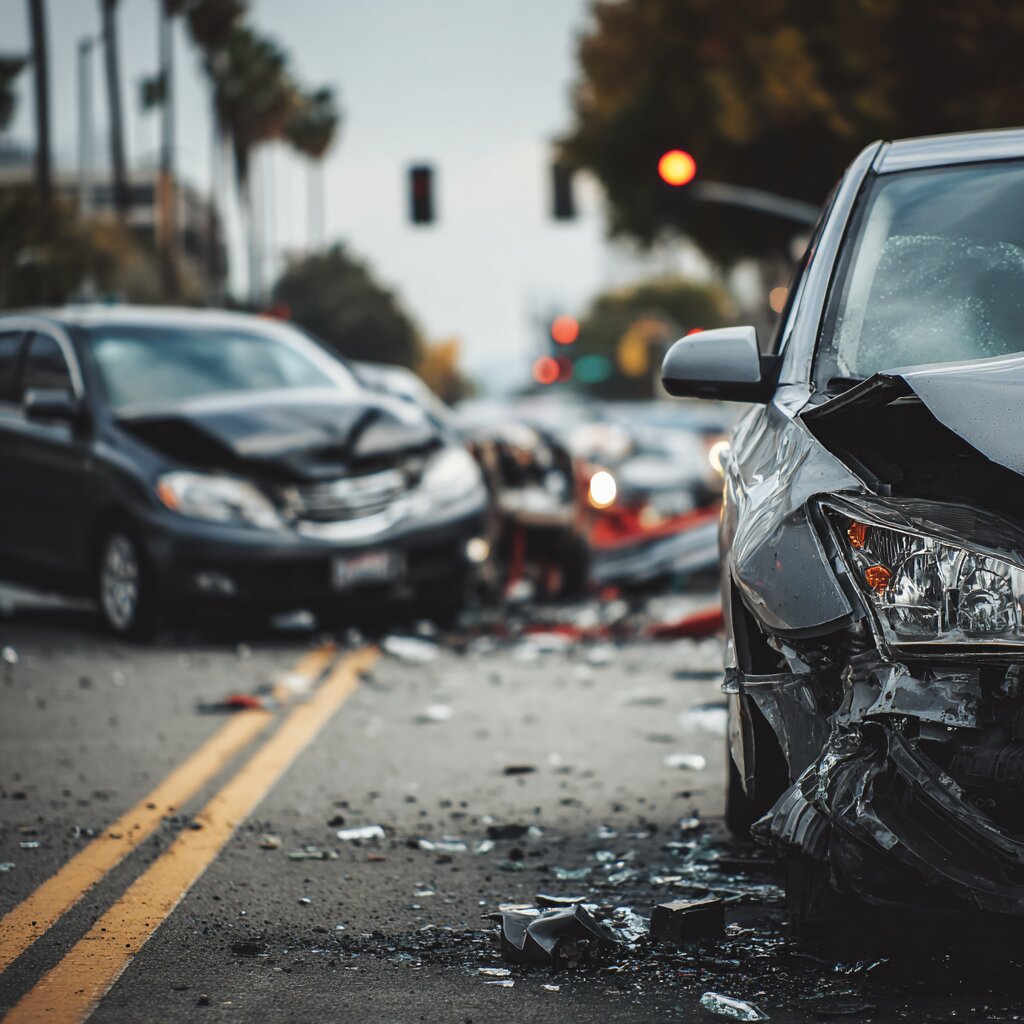
Failure-to-yield accidents occur when drivers ignore right-of-way laws and fail to give way to other vehicles, pedestrians, or cyclists who have the legal right to proceed first. These crashes typically happen at intersections, during left turns, when merging onto highways, or at crosswalks where traffic patterns intersect.
In California, the driver who violates right-of-way rules is usually held financially responsible for resulting injuries and property damage.
Understanding California’s right-of-way laws, common accident scenarios, and your legal options becomes crucial when another driver’s failure to yield causes you harm.
What Is the Right of Way in California?
Right-of-way is the legal right to proceed first in traffic situations. This means one driver has the legal authority to go before another driver, pedestrian, or cyclist.
A failure-to-yield accident occurs when a driver ignores these rules and doesn’t give way to someone who legally should go first. These crashes often occur at intersections, merges, and crosswalks where traffic patterns intersect.
California’s right-of-way laws create order on busy roads and prevent confusion about who should move first. Understanding these rules helps you avoid causing accidents and recognize when another driver violates your rights.
Basic right-of-way rules include:
- At intersections: The driver on the right goes first when two cars arrive simultaneously
- Left turns: Turning drivers must wait for oncoming traffic to pass
- Pedestrian crosswalks: Drivers must stop for people crossing the street
- Emergency vehicles: Pull over immediately when you see flashing lights and hear sirens
- Highway merging: Cars already on the freeway have the right of way over merging traffic
Breaking these laws can result in traffic tickets and make you financially responsible for any accidents you cause.
What Failure to Yield Accidents Happen Most Often?
Certain driving situations create perfect conditions for failure-to-yield crashes. These accidents typically happen when drivers misjudge distances, speeds, or timing.
Common Scenarios at Intersections and Merges
Left-turn collisions are the most dangerous type of failure to yield accident. The turning driver often misjudges an oncoming car’s speed or assumes they have enough time to complete the turn safely.
T-bone crashes at stop signs often occur when drivers roll through stops or assume cross traffic will yield to them, particularly at intersections where visibility and traffic patterns create additional risks.
These side-impact collisions often cause severe injuries because the sides of cars have less protection than the front or back.
Other frequent scenarios include:
- Rear-end accidents when merging: Drivers merge too slowly or cut off faster-moving traffic
- Right-turn-on-red violations: Turning drivers fail to see pedestrians or oncoming cars with green lights
- Four-way stop confusion: Multiple drivers assume it’s their turn to proceed first
Pedestrian and Cyclist Right of Way
California law gives pedestrians the right of way in all crosswalks, even if they’re not marked with painted lines. This means crosswalks legally exist at every intersection, whether you can see them or not.
Cyclists riding on roads have the same rights as car drivers under California bicycle laws. You must yield to bicycles just like you would yield to another vehicle.
Why Do Drivers Fail to Yield?
Most failure-to-yield accidents are completely preventable and result from driver error or poor decision-making. Understanding these causes helps you avoid becoming a victim or causing a crash yourself.
Distraction, Impairment, and Aggressive Driving
Cell phone use is a leading cause of failure to yield accidents, contributing to the growing distracted driving crisis on California roads. Drivers texting, talking, or checking apps miss critical visual cues like yield signs, traffic lights, and approaching vehicles.
Alcohol and drug impairment severely affects judgment and reaction time. Impaired drivers often misjudge safe gaps in traffic or fail to notice other road users entirely.
Some drivers simply choose to be aggressive, intentionally ignoring right-of-way rules to save a few seconds. This reckless behavior puts everyone at risk and often leads to serious crashes.
Obstructed Signs, Poor Visibility, and Inexperience
Environmental factors can contribute to these accidents even when drivers are paying attention. Overgrown vegetation might obscure stop or yield signs.
Weather conditions like heavy rain, fog, or glare from the sun can make it difficult to see other vehicles or traffic control devices. Construction zones often change normal traffic patterns, confusing drivers about who has the right of way.
New drivers are more likely to cause failure-to-yield accidents because they haven’t fully learned complex right-of-way rules. Elderly drivers may also struggle with reaction times or vision problems that affect their ability to yield safely.
Who Is Liable in a Failure to Yield Crash?
The driver who failed to follow right-of-way laws typically bears primary responsibility for the accident. However, California’s legal system is more complex than simply assigning blame to one person.
California uses pure comparative negligence to assign financial responsibility in accidents. This rule means you can still recover money for your injuries even if you were partially at fault for the crash.
Your compensation is reduced by your percentage of fault, but you don’t lose everything, as in some other states. For example, if you’re 30% at fault for an accident, you can still recover 70% of your total damages.
How fault percentages affect your recovery:
- 0% your fault: Recover 100% of damages
- 20% your fault: Recover 80% of damages
- 40% your fault: Recover 60% of damages
- 60% your fault: Recover 40% of damages
Insurance companies know this rule and often try to blame victims, assigning them a higher percentage of fault to reduce their payouts.
Does Negligence per Se Apply in Failure to Yield Cases?
Negligence per se is a legal concept that can make it much easier to prove fault in failure-to-yield cases. This rule assumes a person was negligent if they violated a specific law designed to prevent the type of accident that occurred.
To use negligence per se in your case, you must prove four elements. The defendant must have violated a statute, such as a vehicle code section requiring drivers to yield. The violated law must have been designed to prevent the specific type of harm you suffered.
You must be part of the group of people the law was meant to protect, and the violation must have directly caused your injuries. When these elements are met, the legal burden shifts to the other driver to prove they weren’t negligent.
This doctrine is particularly powerful in failure to yield cases because California’s vehicle code clearly defines when drivers must yield and to whom.
How Do You Prove a Failure to Yield Accident?
Building a strong case requires understanding what constitutes evidence in California car accident claims and gathering it immediately after the crash while it’s still available. The more evidence you collect, the better your chances of proving fault and recovering full compensation.
Key Evidence to Preserve After a Crash
Take photos and videos of everything at the accident scene before vehicles are moved. Capture vehicle positions, property damage, skid marks, traffic signs, and road conditions from multiple angles.
Get contact information from all witnesses who saw the accident happen. Their statements can be crucial if the other driver later denies fault or claims you were speeding.
Always request that police respond to the scene and file an official accident report. Get the report number and the responding officer’s badge number for your records.
Critical evidence to document:
- Vehicle damage patterns: Show the point of impact and force of collision
- Traffic control devices: Prove which signs or signals were present
- Road conditions: Document weather, lighting, and visibility factors
- Witness statements: Provide independent accounts of what happened
How Attorneys Secure Video and Signal Timing Data
Experienced auto accident attorneys have resources and legal tools that individuals cannot access on their own. We can send preservation letters to businesses, requiring them to save security camera footage before it gets automatically deleted.
We can subpoena traffic signal timing records from the city to prove exactly which direction had the green light at the time of your accident. Cell phone records can also be obtained to show if the other driver was texting or calling when the crash occurred.
Expert accident reconstruction specialists can analyze the evidence to produce detailed reports that show exactly how the accident occurred and who was at fault.
What Damages Can You Recover After a Failure to Yield Accident?
California law allows you to seek compensation for both your financial losses and the personal impact the accident has had on your life. Understanding these damage categories helps you recognize the full value of your claim.
Economic and Non-economic Losses in California
Economic damages cover your measurable financial losses from the accident. These include all medical expenses from emergency room visits, surgeries, medications, and physical therapy.
Lost wages from time off work are also recoverable, along with any reduction in your future earning ability if you have permanent injuries. Property damage to your vehicle and personal belongings in the car can be claimed as well.
Non-economic damages compensate you for losses that don’t have receipts but are equally real and devastating. Physical pain and suffering, emotional distress, anxiety, and depression all qualify for compensation.
Recoverable damages include:
- Medical bills: Past and future treatment costs
- Lost income: Wages missed due to injury and recovery
- Pain and suffering: Physical discomfort and mental anguish
- Loss of enjoyment: Inability to participate in activities you previously enjoyed
Medical Liens and Maximizing Your Net Recovery
If you don’t have health insurance, medical providers may agree to treat you on a “lien” basis. This means they provide treatment now and get paid later from your settlement or court award.
Experienced attorneys aggressively negotiate medical liens to maximize your net recovery. This lien reduction significantly increases the amount of money you actually take home from your settlement.
Without proper lien negotiation, you might recover a substantial settlement but keep very little after paying back medical providers at full price.
How Long Do You Have to File in California?
Time limits for filing legal claims are strictly enforced in California, and missing a deadline typically means losing your right to compensation forever. Acting quickly protects your legal rights and preserves evidence.
Two-Year Injury Deadline and Government Claim Rules
California gives you two years from the date of your accident to file a personal injury lawsuit. This might seem like plenty of time, but serious injury cases require extensive preparation and investigation.
However, much shorter deadlines apply when government entities are involved in your accident. If a city bus, county vehicle, or state employee caused your crash, you may need to file an administrative claim within a short deadline, so contact an attorney or the responsible government agency promptly.
Claims against government entities for dangerous road conditions, broken traffic signals, or missing signs also have a six-month deadline. Missing this deadline typically bars your claim completely, regardless of how strong your case might be.
Critical filing deadlines:
- Personal injury lawsuits: Two years from the accident date
- Property damage claims: Three years from the accident date
- Government entity claims: Six months from the accident date
- Wrongful death cases: Two years from the date of death
What Should You Do After a Failure to Yield Accident?
The actions you take immediately after a crash can make or break your ability to recover fair compensation. Following the right steps protects your health, preserves evidence, and strengthens your legal claim.
Steps to Protect Your Health, Evidence, and Claim Value
Call 911 immediately to report the accident and request medical assistance for anyone who appears injured. Police will create an official accident report that documents important details about the crash.
Never admit fault or apologize at the scene, even if you think you might have contributed to the accident. These statements can be taken out of context and used against you later.
Seek medical attention promptly, even if you feel fine initially. Many serious injuries like concussions, internal bleeding, and soft tissue damage don’t show symptoms immediately but can be life-threatening if untreated.
Essential post-accident actions:
- Document everything: Take photos and collect witness information
- Get medical care: See a doctor within 24-48 hours of the crash
- Contact Krasney Law Injury Attorneys: Speak with a lawyer before talking to insurance adjusters
- Avoid quick settlements: Don’t sign anything or accept offers without legal advice
Insurance companies often contact accident victims within hours, hoping to secure quick, low settlements before people understand the extent of their injuries or the car accident settlement process in California.
Injured in a Failure to Yield Crash? Get Legal Help Today
Dealing with the aftermath of a serious accident while trying to recover from your injuries creates overwhelming stress and confusion. You shouldn’t have to fight insurance companies and navigate complex legal procedures while focusing on your health and family.
At Krasney Law Accident Attorneys, we handle every aspect of your failure to yield accident claim so you can concentrate on healing. Our experienced legal team investigates the crash, gathers evidence, deals with insurance adjusters, and negotiates with medical providers to maximize your recovery.
We may handle your case on a contingency-fee basis; contact us to confirm the applicable fee arrangement.
Our decades of experience with California failure-to-yield cases mean we understand exactly how to prove fault, calculate damages, and negotiate with insurance companies to secure the compensation you deserve. We’ve helped thousands of accident victims across California recover millions in settlements and jury awards.
Contact us today for a free, no-obligation consultation to discuss your accident and learn how we can help you secure maximum compensation while you focus on getting your life back on track.
Frequently Asked Questions
How Many California Crashes Involve Failure to Yield?
Failure-to-yield violations contribute to thousands of traffic accidents across California each year, making them a leading cause of intersection collisions and pedestrian injuries statewide.
Does a Ticket Make the Other Driver Automatically Liable?
A traffic citation for failure to yield provides strong evidence of fault, but it doesn’t automatically make the other driver 100% liable, as California uses comparative negligence rules that can assign partial fault to multiple parties.
Can I Go to Jail for Failure to Yield in California?
Simple failure-to-yield violations are typically infractions punishable by fines, but the charge becomes a misdemeanor if the violation causes injury or death to another person.
Should I Give a Recorded Statement to the Other Driver’s Insurance?
Never provide a recorded statement to the at-fault driver’s insurance company without first consulting your own attorney, as adjusters use these statements to find ways to minimize or deny your claim.
How Much of a Settlement Do I Actually Keep?
Your net recovery depends on attorney fees, case expenses, and outstanding medical liens, and experienced lawyers can negotiate liens and fees to help increase your take-home amount.
What if the Insurance Company Says I Was Partly at Fault?
California’s pure comparative negligence law allows you to recover damages even if you were partially responsible for the accident, though your compensation will be reduced by your percentage of fault.
What if the At-fault Driver Has Minimum Insurance Coverage?
If the other driver’s insurance limits are insufficient to cover your damages, you may be able to pursue their personal assets or use your own underinsured motorist coverage if you have it.

