

California crosswalk laws, governed primarily by California Vehicle Code Section 21950, require drivers to yield the right of way to pedestrians in any marked or unmarked crosswalk. Drivers must slow down, exercise due care, and stop when a pedestrian is crossing. Pedestrians also carry responsibilities, you cannot step off a curb into the path of a vehicle that is already too close to stop safely.
Whether you are a driver trying to understand your legal obligations or a pedestrian who was hit while crossing the street, these rules directly affect who is at fault and how much compensation you can recover. California also recently updated its jaywalking law under the Freedom to Walk Act, changed parking rules near crosswalks under the new daylighting law, and maintains specific signal compliance rules that many people are unaware of.
This guide covers every major California crosswalk law you need to know, including pedestrian rights, driver duties, walk signal rules, fault after an accident, and your legal options if you were injured.
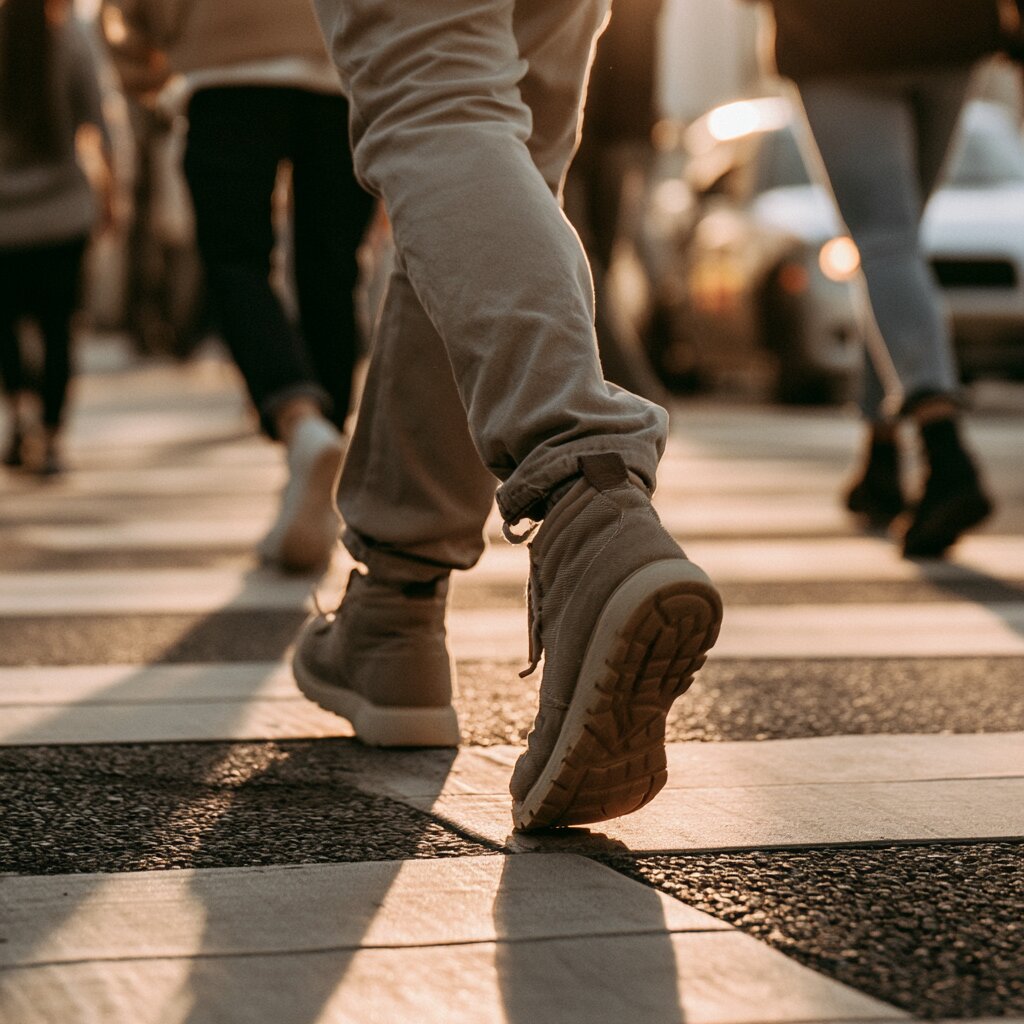
What Is a Crosswalk in California?
A crosswalk is any portion of a road where pedestrians have the legal right to cross. Under California Vehicle Code (CVC) 275, this includes both painted crossings and unmarked ones, meaning a crosswalk legally exists at nearly every intersection, even without a single painted line.
There are two types of crosswalks you will encounter:
- Marked crosswalks: Painted white lines, zebra stripes, or yellow lines near schools that are clearly visible on the road.
- Unmarked crosswalks: Invisible legal crossings that extend from sidewalk to sidewalk wherever two roads meet at an intersection.
Most drivers do not realize unmarked crosswalks exist, which is exactly why so many pedestrian accidents happen at ordinary intersections.
Do Pedestrians Always Have the Right of Way?
Under CVC 21950, drivers must yield to pedestrians in any marked or unmarked crosswalk. However, the right of way is not a blank check, pedestrians have responsibilities too.
- Driver duty: You must slow down, exercise due care, and stop so pedestrians can cross safely.
- Pedestrian duty: You cannot suddenly step off the curb when a car is already too close to stop.
- Shared rule: Even if a pedestrian breaks a rule, drivers must still do everything possible to avoid a collision.
This shared responsibility becomes critical when determining fault after an accident.
Who Counts as a Pedestrian Under California Law?
Under CVC 467, a pedestrian is not just someone on foot. This distinction matters because pedestrian protections only apply to people in this category, not to everyone using the road.
People who are legally considered pedestrians include walkers and joggers, skateboarders and roller skaters, non-motorized scooter users, people in wheelchairs, and people using crutches or walkers. Bicyclists, e-bike riders, and e-scooter riders are not considered pedestrians, they must follow California bicycle laws instead.
Can You Cross Outside a Crosswalk?
Yes, but with conditions. Under CVC 21954 and the 2023 Freedom to Walk Act (AB 2147), you can cross outside a crosswalk as long as you yield to vehicles close enough to be an immediate hazard. Police can only ticket you if a reasonably careful person would see a real danger of collision.
This law decriminalizes jaywalking when done safely, it does not make all jaywalking legal. If there is no sidewalk available, CVC 21956 requires pedestrians to walk close to the left-hand edge of the roadway, facing oncoming traffic.
What Do Pedestrian Walk Signals Mean?
Traffic signals control who moves and when, even when a crosswalk exists. Under CVC 21456, each signal state has a specific legal meaning.
| Signal State | What It Means for You | Driver Duty |
| Steady Walk / Walking Person | You may begin crossing. | Drivers must yield to you. |
| Flashing Don’t Walk / Hand with Countdown | Do not start crossing, but finish if already in the street. | Drivers must wait for you to clear the road. |
| Steady Don’t Walk / Raised Hand | Do not enter the crosswalk. | Drivers have the right of way. |
If you are already in the crosswalk when the signal changes to a flashing hand, you have the legal right to finish crossing.
Can Drivers Stop in or Block a Crosswalk?
No. Under CVC 21970, drivers cannot unnecessarily stop in or block a marked or unmarked crosswalk. The one exception is stopping at a red light before completing a legal right turn.
CVC 21952 adds another layer of protection, when a vehicle crosses a sidewalk to enter or exit a driveway, the driver must stop and let pedestrians pass before pulling into traffic. You always have the right of way on a sidewalk.
What Special Protections Do Blind Pedestrians Have?
Under CVC 21963, pedestrians using a white cane or guide dog have the absolute right of way at all intersections, regardless of what the traffic signal says. Drivers who fail to yield may face misdemeanor charges, up to six months in jail, and fines up to $1,000. Drivers of hybrid and electric vehicles need to be especially careful, as blind pedestrians rely on engine sounds to navigate safely.
How Does Fault Work After a Crosswalk Accident?
California uses a pure comparative negligence rule. This means that even if you share some blame for an accident, you can still recover compensation, your payout is simply reduced by your percentage of fault.
For example, if you suffered $100,000 in damages but were found 30% at fault for stepping off the curb too early, you can still recover $70,000.
When a driver violates a traffic law, like speeding, running a red light, or failing to yield, this is called negligence per se. It means fault is automatically presumed against the driver, which significantly strengthens your claim.
What Compensation Can You Recover After a Crosswalk Accident?
When a negligent driver hits you in a crosswalk, California law allows you to seek compensation for both your financial losses and your personal suffering. At Krasney Law Accident Attorneys, we fight to recover every dollar you are owed.
You may be entitled to:
- Medical expenses: Emergency room visits, surgeries, physical therapy, and future care costs.
- Lost wages and earning capacity: Income you missed and any long-term reduction in your ability to work.
- Pain and suffering: Compensation for physical pain, emotional distress, and reduced quality of life.
- Loss of consortium: Damages for the impact your injuries have on your relationship with your spouse.
- Wrongful death damages: Compensation for families who lost a loved one in a crosswalk accident.
Even if the driver who hit you fled the scene or had no insurance, your own uninsured motorist (UM) coverage may still apply to your injuries as a pedestrian.
What to Do After a Crosswalk Accident
The steps you take immediately after a crosswalk accident have a direct impact on your ability to recover full compensation. Here is what you should do.
Call 911 and Report the Crash
Call the police immediately so they can document the scene and create an official accident report. Stay at the scene until officers arrive and take your statement, as this report becomes critical evidence in your claim.
Get Medical Care Right Away
Accept a paramedic evaluation even if you feel fine, because adrenaline can mask serious pain. Concussions, internal bleeding, and soft-tissue injuries often show delayed symptoms hours or days after the crash.
Take Photos and Gather Witness Information
Photograph the crosswalk, the vehicle’s position, traffic signals, skid marks, and your visible injuries before anything is moved. Collect contact information from any witnesses and note any nearby surveillance cameras that might have recorded the incident.
Decline Recorded Statements to Insurers
Insurance adjusters will call you quickly and ask you to give a recorded statement. Decline politely, adjusters are trained to use your words against you to minimize your payout. Tell them to contact your attorney instead.
Contact Krasney Law Accident Attorneys
At Krasney Law Accident Attorneys, we have decades of experience representing pedestrians and crosswalk accident victims across California. With offices in San Bernardino, Ontario, and Riverside, our team gives you the personal, one-on-one attention your case deserves. We work on a contingency fee basis, meaning you pay nothing unless we recover money for you.
What Deadlines Apply to Crosswalk Accident Claims?
In California, you generally have two years from the date of the accident to file a personal injury lawsuit. However, if your claim involves a government entity, such as a city bus, a public employee’s vehicle, or an unsafe crosswalk design, that deadline shrinks to just six months to file an administrative claim.
Missing either deadline permanently bars you from recovering any compensation, no matter how strong your case is. Contacting an attorney as soon as possible protects your rights and gives your legal team time to preserve evidence before it disappears.
FAQs
Do Drivers Have to Wait for a Pedestrian to Fully Cross Before Proceeding?
Under CVC 21950, drivers must yield the right of way but are not required to wait until a pedestrian reaches the opposite curb. You may proceed safely once the pedestrian has cleared your lane and is no longer at risk from your vehicle.
Who Is at Fault When a Driver Hits a Jaywalker?
Fault is typically shared, because drivers still owe a duty of care to avoid hitting anyone on the road. Under California’s comparative negligence rule, both the driver and the pedestrian may be assigned a percentage of fault based on the specific facts of the accident.
Do Flashing Pedestrian Beacons at Midblock Crossings Require Drivers to Stop?
Yes, when a rectangular rapid-flashing beacon (RRFB) is activated at a midblock crossing, drivers must yield and come to a complete stop. You must remain stopped until the pedestrian has safely cleared your path.
Does Uninsured Motorist Coverage Apply When You Are Hit as a Pedestrian?
Yes, your auto policy’s uninsured or underinsured motorist (UM/UIM) coverage typically protects you even when you are injured as a pedestrian, not a driver. This is especially important if the driver who hit you fled the scene or carried only minimum liability insurance.
Can You Start Crossing During a Flashing Hand Countdown Signal?
No. California law prohibits you from stepping off the curb and beginning to cross once the flashing hand and countdown have started. If you are already in the crosswalk when the countdown begins, you have the legal right to finish crossing safely.

